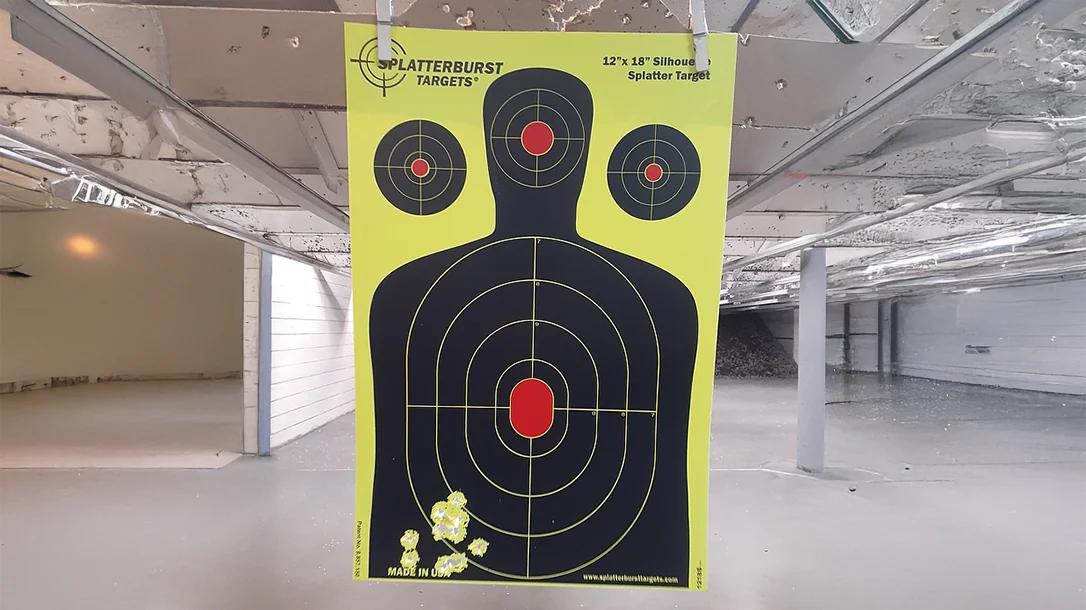
So, your shots are landing low and to the left. It’s frustrating, especially when your fundamentals feel solid. Maybe you’ve even convinced yourself it’s the gun or the ammo. But more often than not, it’s something else entirely. You’re anticipating recoil, and you’re not alone. Whether you’re new to handguns or have a few thousand rounds behind you, recoil anticipation (aka flinching) is one of the most common issues shooters face. Let’s break down how to fix it.
Reducing Recoil Anticipation
The Start: Sight Picture
Before blaming your hands or your trigger press, start with your eyes. Your sight picture should be clear and properly aligned. The front sight should rest squarely in the notch of the rear sight, with equal light on either side.

Advertisement — Continue Reading Below
For most modern three-dot sights, this means all three dots are aligned in a straight line. Crucially, your eye should focus on the front sight — not the rear sight and not the target. A sharp front sight is the window into where your shot will actually land.
The biggest mistake beginners make here is thinking that because their sights were aligned when they decided to shoot, that’s where the round should go. But decision and execution are two separate things. The sights need to be aligned at the moment the shot breaks. That requires patience and a steady hand.
Dry Fire Power
Dry fire is your best friend here. Set up a safe area, clear your firearm, and practice pressing the trigger while watching your front sight. Does it dip or move as the hammer falls or the striker releases? If it does, that’s flinch. You’re subconsciously trying to “help” the gun fire by pushing it—don’t.
Advertisement — Continue Reading Below

Dry fire reveals a lot, but it doesn’t fully replicate the pressure of recoil. That’s where ball-and-dummy drills come in. Have someone else load your magazine randomly with live rounds and snap caps (dummy rounds).
When you hit a dummy round, the gun won’t fire—and if your muzzle dips or twitches, your flinch will be exposed instantly. It’s a humbling drill, but it builds real awareness.
Advertisement — Continue Reading Below
Trust the Pistol
Here’s the thing: your handgun doesn’t need your help to recoil. Its job is to fire, recoil, and cycle on its own. Your job is to let it.
One drill I use with students is “dead-hand shooting.” It’s exaggerated, but it proves a point.
Grip the gun firmly, but allow your wrists and arms to go soft. Fire a round and let the gun ride upward with recoil. You’ll be surprised how little movement it actually takes to control it. You don’t need to shove it forward or push it down. That’s how we get low-left shots.
Advertisement — Continue Reading Below

Grip and Trigger
Let’s talk grip. Too loose, and the gun shifts in your hand. Too tight, and you shake or preload tension into the shot. Find the middle ground: grip hard enough to control recoil but not so hard that your hands tremble. A good cue is to squeeze until the gun begins to tremble, then back off just slightly.
Then there’s the trigger. Your trigger press must be directly to the rear. Any side pressure, especially from too much finger on the trigger, will steer your shot. Feel for the wall (the point where the trigger “stacks” before the break), and apply slow, steady pressure. Done correctly, the gun will surprise you when it goes off. That’s a good thing.
Advertisement — Continue Reading Below
Single Round Drill
One of the most effective drills for overcoming flinch is to load a single live round into your firearm and focus entirely on your sight picture and trigger press. The purpose isn’t just safety, it’s to get so immersed in your process that the gun surprises you when it goes off.
With only one round in the chamber, you eliminate the pressure of follow-up shots and allow yourself to lean fully into technique. Watch the front sight. Align it with precision. Apply steady, increasing pressure to the trigger while maintaining perfect visual alignment, until the shot breaks without conscious effort.
If you can make that shot a true surprise, you’ve started to rewire your brain away from anticipating recoil. The goal is calm, deliberate focus. This drill builds exactly that.
Advertisement — Continue Reading Below

Let the Recoil Go
Another huge leap forward is learning when to brace for recoil. You do not need to anticipate it before the shot. You only need to manage it after the shot. There’s a key distinction here. Recoil is a response to the shot, not something that needs to be muscled against beforehand.
Get your hits first. After the gun goes off, then start thinking about recoil management and returning to your sight picture. Rushing both at the same time sets the stage for error.
Taming Recoil Anticipation Takes Time and Awareness
Every shooter deals with recoil anticipation at some point. It’s a natural part of the learning curve, and fixing it takes time and awareness—not brute force.
If your shots are dropping low-left, slow everything down. Watch the sights. Press the trigger straight back. Get comfortable with the idea that recoil will happen, and you don’t have to do anything to help it.
Train with intention. Watch what your gun is doing, not just after the shot, but during every stage of your trigger press. Use the drills here, and don’t be afraid to ask a trusted friend or instructor for help.
Flinch is sneaky, but it’s beatable. Just keep your eyes forward, your mind calm, and your focus on the front sight.
Shoot safe.