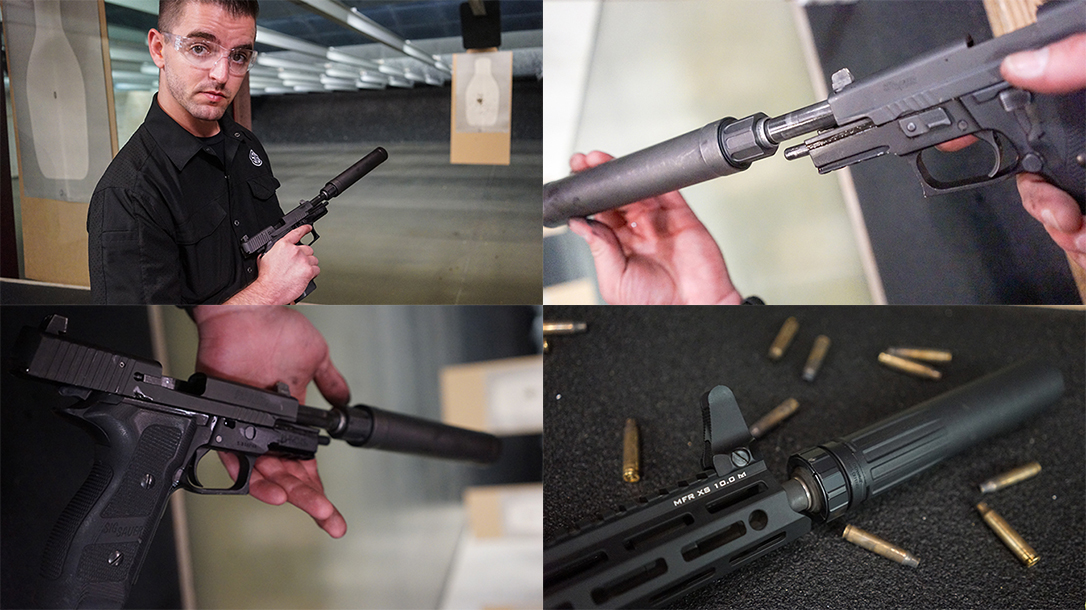

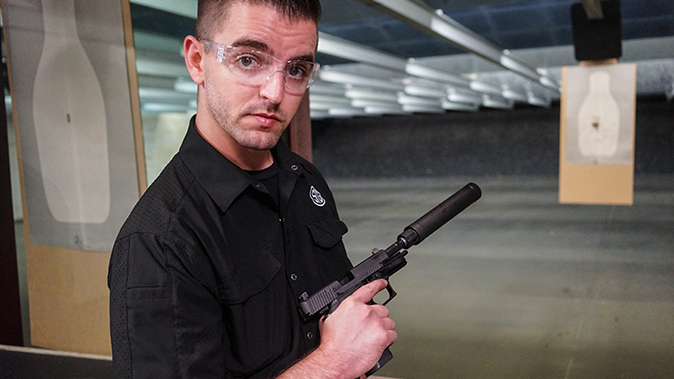
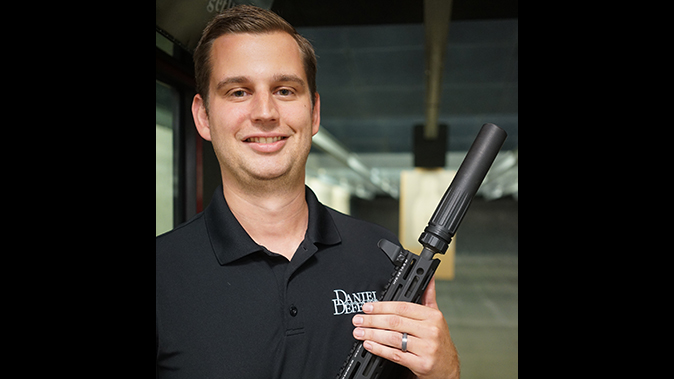
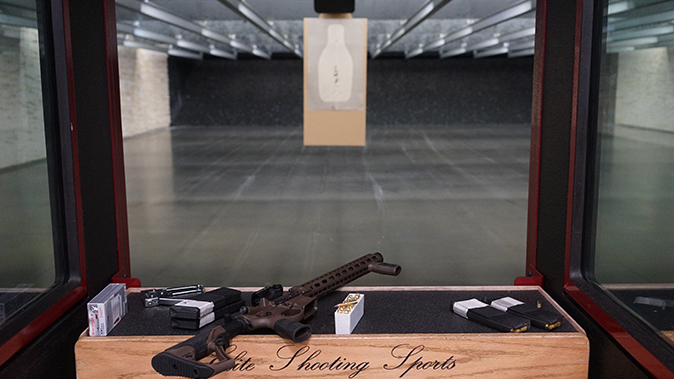
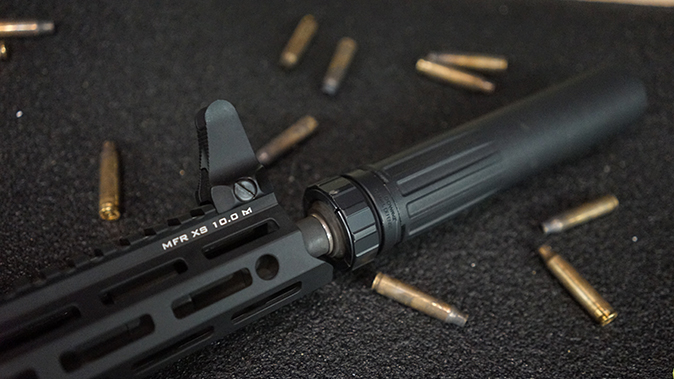
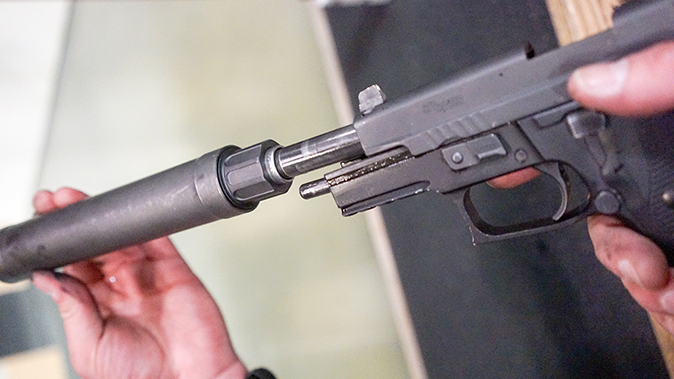
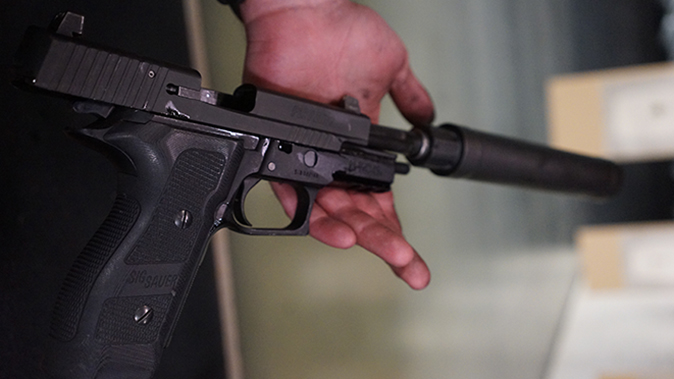
Most Americans love their guns. But they’d probably love them just a little more if they weren’t so loud. The good news is guns that can be made quieter by using a simple device known as a sound suppressor. Think of a suppressor as car muffler, but for your gun. Unfortunately, owning a suppressor takes a bit more paperwork and money to own than a gun. Suppressors are regulated under the National Firearms Act (NFA) of 1934, which means potential owners must jump through a lot of hoops to own one. The proposed Hearing Protection Act of 2017 would ease those unnecessary regulations by only requiring a background check for purchase.
A big part of getting the Hearing Protection Act passed involves educating the public about what suppressors do and don’t do. So, we reached out to Mark Oliva of the National Shooting Sports Foundation (NSSF) to get the facts.
Advertisement — Continue Reading Below
What is the Hearing Protection Act?
“The Hearing Protection Act legislation, both in the House and the Senate, if passed, will take the classifications of suppressors from the 1934 National Firearms Act and move those out so that we can treat the suppressor the same way we treat a rifle,” said Oliva. “Essentially a suppressor is just an accessory to a firearm, but more background checks are associated with buying that suppressor, which means more red tape and more fees associated with buying that suppressor than there are buying a regular long rifle. If passed, the Hearing Protection Act will make that suppressor subject to the same national instant criminal background check that you go through when you buy your firearm.”
What are some common myths associated with the Hearing Protection Act?
“One of the myths that surrounds suppressors is that they completely silence the firearm, and that’s just not true. What it does is it takes the gunfire noise from somewhere around upwards of 185 decibels down to a safer hearing level, somewhere below 140 decibels, which is still louder than a jackhammer, so you’re not going to incur instant and irreparable hearing loss every time you fire.”
“The second myth that we have is that law enforcement is not going to be able to pick suppressed gunfire up when you use things like ShotSpotter technology, which a lot of police use to help define and locate gunfire in urban areas. and that’s not true. The CEO of ShotSpotter actually said they have inadvertently, meaning without trying, been able to pick up suppressed firearms on the ShotSpotter technology. The company believes with few tweaks to their software that they can be able to pick that up all time.”
Advertisement — Continue Reading Below
“The last myth that we argue all the time now is that if you’re going to have suppressed firearms out there, people are going to be using these in crimes. The truth in the matter is, and folks at the BATFE have even borne this out, that I think it’s 0.0015 percent of firearms crimes are committed with a suppressor. I think if criminals see that they’re going to add another 6 to 8 inches on the end of a barrel of a handgun or 6 to 8 inches on the end of a rifle that it’s not exactly a very concealable firearm anymore. Suppressed guns are not the choice of firearms for criminals. They’re just not going to use them.”
Will passing the Hearing Protection Act lead to more gun-related crimes?
“If you shouldn’t own a firearm—if you are a drug dealer, if you are addicted to drugs, if you are violent criminal offender, if you are a felon and you’re not allowed to own a firearm—then you shouldn’t own a suppressor and it will be treated the same under the Hearing Protection Act of 2017. The same background checks—the same delineation of what the law allows for ownership of a firearm—will apply to the ownership of a suppressor. If you own a firearm and you are legally capable of owning that firearm, meaning that there’s nothing preventing you from owning a firearm, then you should have the ability to own that accessory to that firearm as well.”
What are some of the problems in getting this type of bill passed?
“Congress is taking a lot of big bites out of very big apples right now. They’re dealing with some very big, contentious issues. They’re looking at health care reforms, and looking at tax reforms. They’re trying to make sure they get budgets passed, so there are a lot of things that they’re wrestling with right now. Meanwhile, the Hearing Protection Act is sitting on the shelf still waiting for a hearing. So, we at the National Shooting Sports Foundation are continuing to apply a little pressure, to apply a little bit of awareness to what’s going on, to make sure that we can move this particular legislation forward.”
Advertisement — Continue Reading Below
What can we do to help get this bill passed?
“The first and best thing that anybody who’s interested in owning a suppressor or already owns a suppressor and wants to see the Hearing Protection Act passed is to contact your local congressman. Go look them up on congress.gov, to find out their contact information so you give them a call, give them an email, send them a letter. These things count.
“A lot of people have misconceptions that those letters will just kind of go into some circular file somewhere, but legislators pay attention when their voters start telling them that this is what they’re interested in and this is what they want to hear about. The Hearing Protection Act of 2017 in the House of Representatives, the last time I checked, was still among the top 10 bills viewed by the public so people are very interested in this. There are currently 141 co-sponsors in the House, meaning 141 of our representatives have signed on to say, ‘Yes, we want this bill moved.’”
Advertisement — Continue Reading Below
What changes if the Hearing Protection Act passes?
“If the Hearing Protection Act goes through as it’s written right now, you’ll simply go into that dealer, tell them you want to buy that firearm, you want to buy that suppressor, and they’re going to run a federal instant criminal background check on you. The NICS background check is run through the FBI the same way it is when you buy a long rifle. If I can buy that firearm, then I’ll be able to buy that firearm accessory, the suppressor, and take both with me when I leave the store.”
Mark Oliva summed up NSSF’s views on the Hearing Protection Act with these thoughts: “The Hearing Protection Act is something that is probably long overdue. We just want to level the playing field a little bit, and make it a little bit easier for legal gun owners who are able to own that firearm to be able to own a suppressor. Doing so can make their shooting experience a little more enjoyable and a little bit safer.”
The proposed Hearing Protection Act of 2017 can give millions of law-abiding American gun owners easier access to an accessory that aids them in being a safer, more accurate and proficient shooter. It also can make a significant difference to the hearing health of the shooters and those around him or her.
Advertisement — Continue Reading Below
Contact your House representatives to ask for their “yes” vote on the Hearing Protection Act as written. To learn more, make sure you check out the American Suppressor Association’s website. Visit americansuppressorassociation.com and do your part to get this bill passed.
This article is from the January/February 2018 issue of “Combat Handguns” magazine. To order a copy and subscribe, visit outdoorgroupstore.com.